4G Cameras: The Ultimate Guide, I see the world market for 4G security cameras growing fast. People want dependable security they can check from anywhere. This demand comes from both developed and growing areas. Many homes, businesses, and public areas now seek wireless security. They need solutions that don’t depend on fixed wires or Wi-Fi.
4G Cameras Market Outlook
The Rise of 4G Cameras: Redefining Wireless Surveillance in 2025
I see the world market for 4G security cameras growing fast. People want dependable security they can check from anywhere. This demand comes from both developed and growing areas. Many homes, businesses, and public areas now seek wireless security. They need solutions that don’t depend on fixed wires or Wi-Fi.
Market forecasts show strong growth, in my view:
Key Drivers of 4G Camera Market Growth
Market Dynamics and Competition
Based on my observations, 4G cameras keep growing. This means wireless security will be even more important for safety needs in 2025 and after.
What is a 4G Camera?
A 4G camera is a cellular-enabled surveillance device that transmits video and images over a 4G LTE network, eliminating the need for Wi-Fi or wired connections. These cameras have a built-in 4G LTE modem, allowing direct connection to cellular networks for real-time remote monitoring and data transmission from virtually any location, making them highly versatile.
Main Features of 4G Cameras
Real-world Applications of 4G Cameras
How Do 4G Security Cameras Work?
4G security cameras are useful wireless tools. They use 4G LTE cell service, not Wi-Fi or wired internet. From my experience, they work like smartphones. They have a SIM card and a 4G modem inside. This lets them send live video and get commands from your device anywhere.
Key Components of 4G Security Cameras
How the Workflow Operates
4G Camera Data Usage: How Much Data Do 4G Cameras Use?
Main Factors Affecting 4G Camera Data Consumption
Typical Data Usage Estimates
Here are some estimates might be helpful:
| Resolution | Mode | Frame Rate | Data Usage (GB/day) | Compression | Notes |
| 720p | motion-activated | 30fps | 1–2 | H.264 | Low activity |
| 1080p | motion-activated | 30fps | 2–4 | H.264 | Moderate activity |
| 1080p | continuous | 15fps | 6-10 | H.264 | Higher estimate |
| 1080p | continuous | 30fps | 10-20 | H.264 | Higher activity |
| 4K | continuous | 30fps | 50–100 | H.264 | Very high usage |
Saving Data on 4G Security Cameras
Do 4G Cameras Work with Wi-Fi? How They Connect
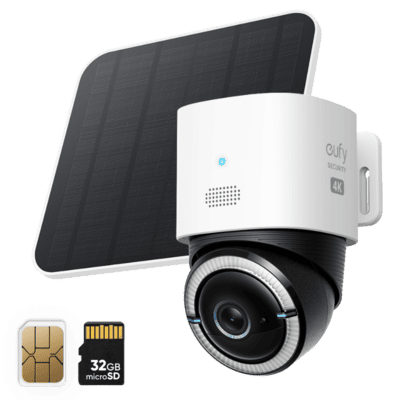
If you’re picking a 4G security camera, I think it’s important to know how it connects. This helps it work best and gives you choices. Many 4G cameras today can use both cell signals and Wi-Fi. But, check first because not all of them do. I suggest you look at the details for each camera before you buy it.
Poular 4G Cameras Work with Wi-Fi
.

Why Connecting Two Ways Is Good
I think choosing a 4G camera that uses both, like the Eufy 4G LTE Cam S330 or Arlo Go 2, gives you great options. You get steady, reliable security coverage. But, if you need a camera for a remote spot with no Wi-Fi, a 4G-only model like the Vosker V150 is a good pick in my experience.
4G Trail Camera Use Cases: Real-Time Security and Watching Things
From my perspective, 4G trail cameras have really changed wireless security and watching outdoor areas. Because they connect in real-time, you can view live pictures and videos from far away. You also get instant alerts. I find these cameras are excellent choices for watching wildlife, hunting, stopping poaching, keeping an eye on property, and managing farms.
Specific Ways People Use Them and Some Examples
How to Choose the Best 4G Camera: Key Features & Factors
If you’re choosing a 4G wireless security camera, I think you should look at these key features. They help you get the best performance and value.
Carrier Compatibility & Signal Strength
Battery Life & Solar Power
Data Plan Costs & Usage
Durability & Weatherproofing
Advanced Features to Consider
The 4G camera market is surging—projected to hit $6.6B by 2031—driven by demand for Wi-Fi-free surveillance in remote sites, construction zones, and smart cities. Key features like solar power compatibility, AI motion alerts, and dual 4G/Wi-Fi connectivity (e.g., Arlo Go 2) ensure reliability, while H.265 compression slashes data usage by 50%. Yet, buyers face choices: rugged IP65 models for harsh weather vs. budget-friendly trail cams for wildlife monitoring.