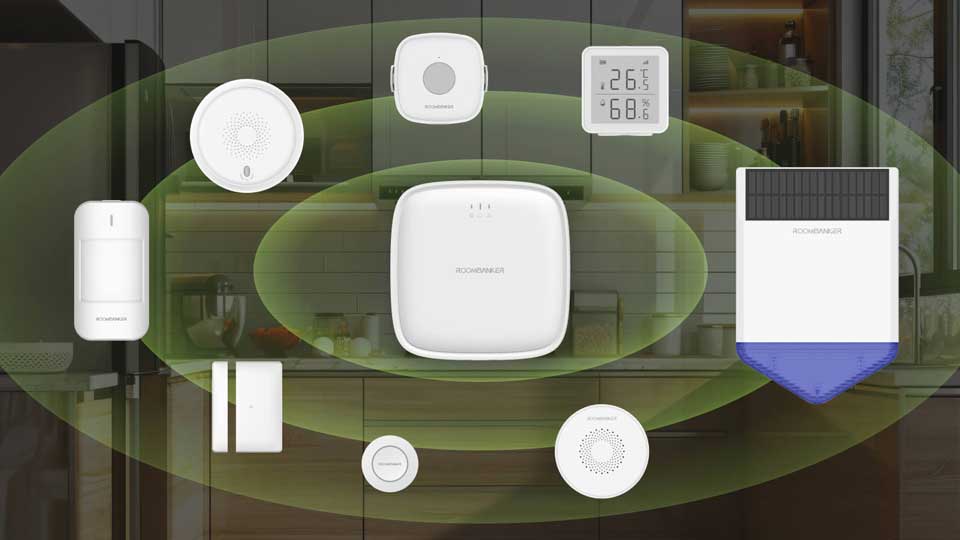
Modern intrusion detection systems (IDS) and smart home security architectures are designed to deliver high levels of security while maintaining maximum uptime. However, high False Alarm Rates (FAR) remain one of the most critical operational challenges in modern security deployments. A false alarm isn’t merely an annoyance; it causes system fatigue, degrades police response priority, leads to hefty municipal fines, and degrades trust in automated monitoring networks.
When an alarm panel triggers erroneously, the issue rarely lies within the core logic controller itself. Instead, false alarms typically stem from physical sensor miscalibration, environmental thermal/RF noise, loop impedance degradation, or misconfigured logic thresholds. This comprehensive guide breaks down the underlying telemetry, hardware faults, and software logic responsible for unintended trip events—providing developer-level diagnostics and actionable fixes to engineer absolute reliability into your home alarm system.
📌 Table of Contents
- 1. Technical Root Causes of Sensor-Level False Triggers
- Passive Infrared (PIR) Motion Sensors
- Magnetic Reed Switches (Door/Window Contacts)
- Acoustic Glass Break Detectors
- 2. Hardware & Electrical Diagnostics: Step-by-Step Fixes
- PIR Sensor Re-Calibration and Optical Masking
- End-of-Line (EOL) Resistor and Loop Impedance Testing
- Power Supply, Standby Batteries, and Low-Voltage Ripple
- 3. System Diagnostics & Hardware Remediation Matrix
- 4. Environmental and Wireless Network Optimization
- Mitigating Radio Frequency Interference (RFI) and EMI
- Handling Mechanical Vibrations and Structural Settlement
- 5. Software, Controller Logic, and CP-01 Standard Configurations
- ANSI/SIA CP-01 Standards Compliance
- 6. Integration with Video Telemetry and Remote Management
- 7. Preventative Maintenance and Calibration Protocol
- Summary
- Sıkça Sorulan Sorular
- What is the single most common cause of false alarms in home security systems?
- How can I stop my pets from setting off my motion detectors?
- Why does my alarm system trip during strong storms or high winds?
- What is “Swinger Shutdown” and how does it prevent false alarm dispatches?
- How often should backup batteries be replaced to avoid low-voltage alarm trips?
1. Technical Root Causes of Sensor-Level False Triggers

📌 İlginizi Çekebilir: Setting Up HIKVISION NVR Cloud Storage
To eliminate false alarms, you must first understand the physics and signal processing mechanisms of your edge sensors. Alarm sensors are binary state transducers connected to supervised zone loops. When environmental noise shifts the baseline voltage or state beyond a defined comparator threshold, the panel registers an alarm condition.
Passive Infrared (PIR) Motion Sensors
PIR sensors operate by monitoring differential infrared radiation ($ infrared energy $) across two or more pyroelectric elements. A Fresnel lens divides the field of view into distinct detection zones. When an object emitting mid-infrared wavelengths passes through these zones, the sensor detects a dynamic temperature delta ($Delta T$).
- Thermal Drafts and HVAC Currents: Forced-air systems, space heaters, and direct sunlight create localized convective heat plumes. Rapid air temperature fluctuations ($Delta T / Delta t$) can simulate the thermal signature of a moving human body, tripping the pyroelectric element.
- Small Insects and Arachnids: Insects crawling across the external face of the Fresnel lens occupy a massive relative percentage of the optical field of view. Because they sit directly on the optics, their small heat signature is magnified, breaking the detection threshold.
- Pet Movement: Standard PIRs without pet-immunity algorithms register domestic animals weighing over 30 to 40 lbs as valid human targets due to their thermal output and footprint within lower detection zones.
Magnetic Reed Switches (Door/Window Contacts)
Magnetic contacts utilize a mechanical reed switch held open or closed by an external neodymium magnet. These are deployed on entry points as normally closed (NC) or supervised loops.
- Mechanical Misalignment and Hysteresis: As doors and windows warp, settle, or shift under wind pressure, the distance between the magnet and the internal reed contact approaches its maximum operating gap limit (typically 0.5 to 0.75 inches). Micro-movements from wind vibration cause transient open-circuit states, triggering an instant zone violation.
- Ferromagnetic Interference: Mounting magnetic contacts directly on steel or iron doors without non-magnetic spacers bleeds the magnetic field away from the switch, reducing tolerance and inducing unpredictable state changes.
Acoustic Glass Break Detectors
Glass break sensors utilize microphonic transducers tied to digital signal processors (DSPs) tuned to specific frequency spectra. Modern sensors require a dual-stage trigger: a low-frequency flex wave (infrasound caused by impact) followed immediately by a high-frequency shatter wave (typically 4 kHz to 6 kHz).
- Acoustic Resonance Clutter: High-volume media systems, dropped metallic objects, barking dogs, or slamming doors can mimic the acoustic profile of breaking glass if the DSP gain control is set too high or if the dual-frequency verification window is too short.
2. Hardware & Electrical Diagnostics: Step-by-Step Fixes

📌 İlginizi Çekebilir: The Best Hidden Cameras in 2025
Resolving false alarms at the hardware layer requires systematic testing, re-alignment, and physical optimization. Below are engineering-grade procedures to stabilize edge hardware.
PIR Sensor Re-Calibration and Optical Masking
If your PIR sensors are generating intermittent unverified zone trips, perform the following physical adjustments:
- Reposition relative to HVAC sources: Ensure PIR sensors are positioned at least 6 feet away from supply vents, radiators, and windows receiving direct solar exposure. Point the optical axis parallel to HVAC airflow rather than directly at heat sources.
- Adjust Physical Jumpers and Pulse Count Logic: Most hardwired and high-end wireless PIRs feature hardware jumper pins or dip switches for pulse counting (1, 2, or 3 pulses). Increase the pulse count threshold from 1 to 2 or 3. This obligates the logic board to register multiple consecutive infrared beam crossings within a 10-second window before pulling the alarm output relay low.
- Apply Internal Optical Masking: If pets trigger low-angle zones, open the sensor enclosure and apply opaque electrical tape or vendor-supplied masking foil over the lower segments of the Fresnel lens array. This mechanically blinds the sensor to ground-level movement below 3 to 4 feet while maintaining coverage for human vertical heights.
End-of-Line (EOL) Resistor and Loop Impedance Testing
In hardwired security panels (e.g., Honeywell Vista, DSC PowerSeries, Interlogix), loop integrity is monitored via End-of-Line (EOL) resistors (typically 2.2kΩ, 4.7kΩ, or 5.6kΩ). Corrosion, loose terminal screws, or damaged copper leads alter loop resistance, causing the panel to interpret an intact loop as an open circuit (alarm state).
To diagnose loop stability using a Digital Multimeter (DMM):
- Power down the zone panel loop and disconnect the zone wires from the main terminal block.
- Set your DMM to measure low resistance ($Omega$).
- Connect the leads to the zone pair and monitor loop baseline resistance. The measured value should match your specified EOL resistor rating $pm 5%$.
- Perform a “flex test” by physically shaking doors, windows, and sensor enclosures connected to that zone. If resistance fluctuates by more than $50,Omega$ during mechanical vibration, replace degraded reed switches or retighten terminal connections.
Power Supply, Standby Batteries, and Low-Voltage Ripple
Voltage drops and electrical noise on the auxiliary power bus (12V DC) are leading causes of random, multi-zone false alarms. When an AC power failure occurs, or when a Sealed Lead-Acid (SLA) or LiFePO4 backup battery drops below critical voltage ($< 10.5text{V}$ DC), edge sensors may experience logic glitches, causing output relays to drop out.
- Test Battery Load Voltage: Disconnect AC power from the main control panel and measure the standby battery voltage under load. If the voltage rapidly decays below 11.5V DC within 5 minutes, replace the battery immediately.
- Filter AC Ripple Voltage: Measure the auxiliary DC bus with your DMM set to AC Volts mode. If you read more than $0.2text{V}$ AC ripple, the power supply filter capacitors have failed, causing AC noise to inject directly into operational sensor logic circuits. Replace the main power transformer or power supply board.
3. System Diagnostics & Hardware Remediation Matrix

Use the following diagnostic matrix to rapidly isolate failure vectors across various sensor types, observed symptoms, and hardware remediation protocols.
- PIR Motion Detector
- Random triggers during summer afternoons or when heating turns on.
- Thermal convection plumes; high $Delta T / Delta t$ baseline shift.
- Re-aim optical axis away from vents/windows. Increase pulse count jumper from 1 to 2/3. Clean Fresnel lens with isopropyl alcohol.
- Magnetic Reed Contact
- Intermittent zone open faults when windy or during door closure.
- Mechanical gap widening beyond hysteresis limit; physical warp.
- Replace standard contact with wide-gap contact (1.5″ gap tolerance). Install non-magnetic plastic spacers on steel doors.
- Acoustic Glassbreak
- Triggers when dishes clatter, TV plays loud, or thunder rolls.
- Gain set too high; missing flex-frequency requirement.
- Lower DSP micro-switch sensitivity. Conduct hand-held glass break simulator testing to verify dual-stage (flex + shatter) registration.
- Hardwired Loop (General)
- Intermittent “Tamper” or “Trouble” faults across multiple zones.
- Oxidized wire splices or floating ground causing resistance variation.
- Measure loop resistance with DMM. Re-crimp splices with B-connectors; verify End-of-Line (EOL) resistor values ($pm 5%$).
- Wireless Transceiver Node
- RF Supervisory Loss or sudden false trigger during high network traffic.
- 2.4GHz / 900MHz RF jamming, high noise floor, or battery voltage decay.
- Replace CR123A/CR2032 cell. Relocate panel/repeater away from Wi-Fi routers. Enable Frequency Hopping Spread Spectrum (FHSS).
| Sensor Type | Observed Symptom | Root Failure Mode | Technical Remediation Protocol |
|---|
4. Environmental and Wireless Network Optimization
As security deployments migrate from hardwired loops to wireless protocols (Z-Wave, Zigbee, proprietary sub-GHz RF), environmental noise extends into the electromagnetic spectrum.
Mitigating Radio Frequency Interference (RFI) and EMI
Sub-GHz (433MHz, 345MHz, 868MHz, 915MHz) and 2.4GHz wireless sensors rely on clear RF environments to transmit telemetry packets to the main controller hub. Radio frequency interference from unshielded electronics can corrupt data packets, causing the panel to log supervisory loss or false tamper events.
- Maintain Physical Distance from RF Noise Sources: Maintain a minimum clearance of 3 to 6 feet between security hubs/transceivers and high-frequency noise emitters such as Wi-Fi 6E/7 access points, microwave ovens, high-power switching power supplies, and smart home hubs.
- Implement RF Spectrum Auditing: Use an RF spectrum analyzer or software-defined radio (SDR) dongle to scan your environment for high background noise floors. If a specific frequency band is polluted, shift your home automation mesh (Z-Wave/Zigbee) to non-overlapping channels (e.g., Zigbee channels 11, 15, 20, or 26 to avoid Wi-Fi channel overlap).
Handling Mechanical Vibrations and Structural Settlement
Vibrations caused by heavy traffic, nearby railway tracks, or HVAC compressor cycling can mechanically trigger high-sensitivity micro-switches and tilt/vibration sensors.
To eliminate mechanical false alarms, damp physical vibrations by applying neoprene isolation gaskets behind the mounting plates of door contacts, glass break detectors, and vibration sensors mounted directly to outer walls or window frames.
5. Software, Controller Logic, and CP-01 Standard Configurations
Hardware stabilization is only half the equation. Configuring proper software verification algorithms within the security panel operating system drastically cuts down false dispatches.
ANSI/SIA CP-01 Standards Compliance
The Security Industry Association (SIA) established the ANSI/SIA CP-01 standard specifically to combat user-error and equipment-induced false alarms. Ensure your system panel has the following logic flags enabled:
- Exit and Entry Delay Buffers: Short delay windows are a primary cause of user-induced false alarms. Program entry delay times to a minimum of 30 to 45 seconds, and exit delay times to 60 seconds. This prevents accidental triggers when disarming via physical keypads or smartphone interfaces.
- Cross-Zoning (Sequential Verification Logic): Cross-zoning requires two independent, adjacent zones to trip within a designated time window (e.g., 30 to 60 seconds) before sending an alarm signal to the central station. For example, if a hallway motion sensor triggers, the panel waits for a secondary trigger (such as an interior door contact or second PIR) before generating an actual alarm event. If the second event does not occur, the initial trip is logged as an unverified event.
- Swinger Shutdown Protocols: A “swinger” is a malfunctioning sensor that repeatedly trips during a single armed period. Swinger shutdown logic automatically disables a specific zone once it has triggered a pre-set number of times (typically 1 to 3 trips) within the same arming cycle, preventing continuous false alarms to monitoring services.
- Alarm Cancel and Abort Windows: Configure a 15 to 30-second abort window. If the system is accidentally tripped, disarming the system within this abort window stops the panel from transmitting an alarm signal to the monitoring station, eliminating false police dispatches.
6. Integration with Video Telemetry and Remote Management
Modern security systems rarely operate in isolation. Combining edge sensors with video surveillance and mobile endpoints allows for real-time video verification, eliminating the need to dispatch emergency services blindly.
Integrating smart cameras equipped with neural-network-based object detection (human vs. vehicle vs. animal classification) provides a secondary layer of confirmation for PIR and perimeter sensors. If a perimeter beam breaks, the surveillance system checks the video feed to confirm if a human target is present before escalating the alarm state.
Proper app configuration and user education play an equally vital role in reducing false alarms. Monitoring systems should be seamlessly controlled via dedicated mobile applications that provide instant remote disarming, zone bypassing, and real-time push notifications.
If you are managing modern multi-channel security architectures, configuring clear app management workflows is critical. For detailed guidance on setting up mobile interfaces, push notifications, and remote system controls, check out our comprehensive guide on Swann Security App: Manuals and Tutorials.
Furthermore, modern security paradigms often extend beyond the physical footprint of the home to include perimeter vehicular access routes, driveways, and mobile endpoints. Integrating vehicle surveillance, dashcams, and mobile video feeds into your home security dashboard enhances situational awareness around driveway boundaries. For step-by-step instructions on deploying external mobile and vehicular telemetry nodes, refer to our comprehensive SAFY Dashcams Installation Guide.
7. Preventative Maintenance and Calibration Protocol
To ensure long-term stability and zero false alarms, implement this biannual engineering maintenance protocol across your entire hardware infrastructure:
- Visual Inspection and Cleaning: Inspect all PIR lenses, glass break grilles, and camera optics. Clean dust, cobwebs, and insect debris using an anti-static microfiber cloth and lens cleaner. Insects building nests inside PIR housing cavities are a major source of erratic triggers.
- Terminal and Voltage Checks: Open keypads and system control boxes. Tighten terminal block screws to prevent floating connections. Measure secondary battery voltage under load using a DMM to ensure power reserves remain stable.
- Walk-Testing and Zone Auditing: Put the control panel into “Walk Test Mode.” Systematically walk through all PIR zones, open every door and window, and test glass break detectors using an acoustic sound generator. Verify that every node reports correctly without residual zone hanging or delay.
- Firmware and Software Patching: Check panel and sensor node firmware versions. Manufacturers regularly push OTA (Over-The-Air) or serial firmware updates to refine DSP detection algorithms, adjust RF protocol timing, and resolve false trigger edge cases.
Summary
False alarms in home alarm systems are rarely unavoidable acts of nature—they are engineering defects caused by physical misalignments, improper sensitivity settings, environmental interference, or unoptimized software parameters. By understanding sensor mechanics, auditing loop resistance, setting proper pulse counts and cross-zoning rules, and keeping firmware updated, you can engineer a rock-solid security infrastructure with virtually zero false triggers.
Sıkça Sorulan Sorular
What is the single most common cause of false alarms in home security systems?
User error remains the primary driver of false alarms (such as entering incorrect disarm codes or forgetting active entry delays). From a hardware perspective, improperly positioned PIR motion sensors—placed near HVAC vents, windows, or in line with direct sunlight—represent the leading technical cause of false trip events.
How can I stop my pets from setting off my motion detectors?
To prevent pets from triggering PIR sensors, ensure your hardware supports pet immunity (typically up to 40-80 lbs). Mount the sensor at the manufacturer’s recommended height (usually 7.5 feet), invert the lens if supported to create a pet alley, or physically mask the lower segments of the internal Fresnel lens to blind the sensor to movement near the floor.
Why does my alarm system trip during strong storms or high winds?
High winds cause structural flexing and door/window rattling, which can momentarily widen the mechanical gap between a magnetic contact and its reed switch beyond its operational threshold. Upgrading to wide-gap magnetic contacts or adjusting door latches to eliminate physical play will resolve this issue.
What is “Swinger Shutdown” and how does it prevent false alarm dispatches?
Swinger Shutdown is a panel-level software feature defined under the ANSI/SIA CP-01 standard. It automatically suppresses further alarm signals from a specific sensor after it has triggered a designated number of times (usually 1 to 3) within the same armed period. This prevents a malfunctioning sensor from spamming central station monitoring or incurring repeated municipal fines.
How often should backup batteries be replaced to avoid low-voltage alarm trips?
Standard Sealed Lead-Acid (SLA) backup batteries in main control panels should be replaced every 3 to 5 years. Lithium cell batteries inside wireless edge sensors (such as CR123A or CR2032 cells) typically last 3 to 5 years but should be replaced immediately once system telemetry registers a low-battery status to prevent logic dropouts.