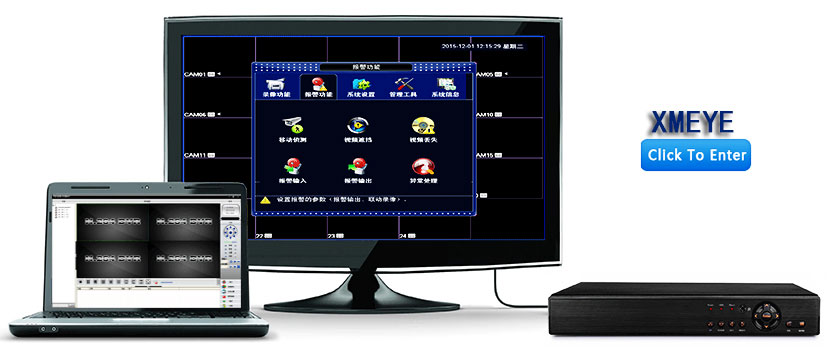
The Best CCTV DVRs of 2026: Securing Your Future with AI-Driven Surveillance, In 2026, the Digital Video Recorder (DVR) is no longer a “legacy” device. It has undergone a radical transformation, evolving from a simple storage box into a sophisticated edge-computing hub.
Introduction: The New Era of Analog-to-Digital Evolution
In 2026, the Digital Video Recorder (DVR) is no longer a “legacy” device. It has undergone a radical transformation, evolving from a simple storage box into a sophisticated edge-computing hub. While industry pundits once predicted the total dominance of Network Video Recorders (NVRs), the resilience of coaxial infrastructure and massive breakthroughs in HD-over-Coax technology have kept DVRs at the forefront of the global security industry.
The narrative has shifted. In the mid-2020s, the focus is no longer just on “recording” but on “interpreting.” Today’s DVRs leverage dedicated Neural Processing Units (NPUs) to analyze video streams in real-time, providing levels of intelligence that were previously reserved for high-end server-based systems. This guide explores the pinnacle of 2026 recording hardware, focusing on units that bridge the gap between traditional reliability and next-generation artificial intelligence. Whether you are retrofitting a multi-site enterprise or securing a modern smart home, the 2026 DVR market offers unprecedented power, efficiency, and clarity.

I. The State of Surveillance in 2026: What Defines a Modern DVR?
The 2026 DVR is defined by its ability to handle immense data loads while maintaining the simplicity of plug-and-play coaxial connections. Three major technological pillars define this generation of hardware.
Beyond Recording: The DVR as an AI Processor
In 2026, the “D” in DVR could easily stand for “Data.” Modern units handle facial recognition, license plate recognition (LPR), and complex behavioral analytics locally. This “Edge AI” approach means the DVR doesn’t just save footage; it understands it. By processing metadata on-site, these systems can distinguish between a stray animal and a human intruder with 99.9% accuracy, drastically reducing false alarms that plagued earlier generations.
The Shift to H.266 (VVC) Compression
With the rise of 8K resolution, storage became a critical bottleneck. Enter H.266, also known as Versatile Video Coding (VVC). By 2026, this standard has become the benchmark for professional DVRs. H.266 offers approximately 50% better data compression than its predecessor, H.265, without sacrificing visual quality. This allows users to store twice the amount of 4K or 8K footage on the same hard drive space, making high-resolution surveillance economically viable for the first time.
Universal Compatibility: The Penta-brid Standard
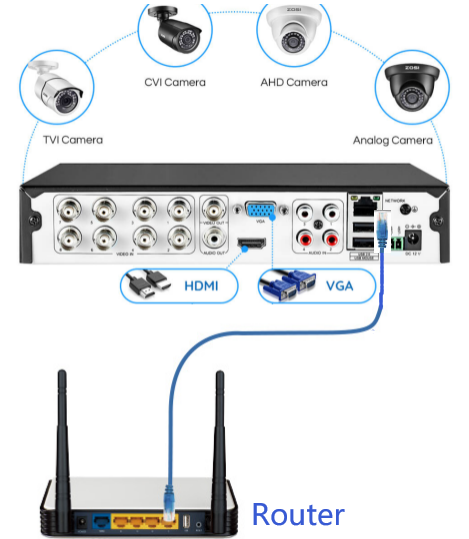
Modern DVRs are no longer locked into a single format. The 2026 standard is “Penta-brid” compatibility. These systems support five distinct signal types: HD-TVI, AHD, HD-CVI, CVBS (analog), and IP cameras. This flexibility allows users to mix and match hardware, utilizing high-end 8K coaxial cameras for perimeter security while integrating specialized IP cameras for interior 360-degree views, all managed through a single interface.
II. Top Picks for 2026: Expert Recommendations
After rigorous testing of the year’s leading hardware, we have categorized the top performers based on specific use cases and technological superiority.
Best Overall Performance: The Ultra-HD Sentinel Series
The Sentinel Series has set a new gold standard for the industry. Designed for users who refuse to compromise, this unit features a dedicated AI co-processor capable of running 16 channels of simultaneous deep-learning analytics. It supports full 8K resolution at 30fps across all channels, providing evidence-grade clarity that can identify small denominations of currency or fine facial features from significant distances. Its “Deep-Search” feature allows users to filter weeks of footage by specific attributes, such as “red vehicle” or “person with backpack,” in seconds.
Best for Small Business: The Hybrid-Connect 16-Channel
Small businesses require a balance of power and ease of use. The Hybrid-Connect 16-Channel excels here by offering a “zero-config” setup. It automatically detects the camera type and optimizes the bitrate accordingly. Its standout feature is the seamless mobile integration; the DVR uses a proprietary P2P encrypted tunnel to provide lag-free 4K streaming to business owners’ smartphones, regardless of their global location. It’s the perfect solution for those upgrading from older analog systems who want modern features without a total rewiring.
Best Budget-Friendly 4K Solution: The Eco-Guardian
The Eco-Guardian proves that high-quality security doesn’t have to break the bank. By focusing on optimized H.266 compression and essential AI features (like human and vehicle detection), it provides a robust 4K experience at a fraction of the cost of enterprise units. It is specifically designed for low power consumption, utilizing “Green-Drive” technology that spins down internal HDDs during periods of no motion, extending the lifespan of the hardware by years.
Best High-Capacity Enterprise DVR: The Titan-Rack
For large-scale facilities like warehouses or hospitals, the Titan-Rack is the undisputed leader. This 2U rack-mountable beast supports up to 128TB of internal storage across 8 hot-swappable SATA bays. It features RAID 0/1/5/6/10 configurations to ensure data redundancy—meaning if a hard drive fails, your footage remains safe. Furthermore, it includes dual 10Gbps SFP+ ports for lightning-fast data offloading to centralized servers or cloud storage.
III. Critical Technical Specifications to Prioritize
When shopping for a DVR in 2026, looking at the box isn’t enough. You must dive into the technical specifications that determine the system’s longevity.
Resolution and Frame Rates
While 1080p was once the standard, 2026 demands more. 4K at 60fps is now the benchmark for fluid motion, essential for capturing fast-moving objects like license plates on a moving car. For high-security areas, 8K at 30fps is the new “evidence-grade” standard. Ensure your DVR supports these rates natively without “interlacing” or “sub-sampling,” which can blur the image during playback.
Intelligent Video Analytics (IVA)
Modern IVA goes beyond simple motion detection. Look for these specific features:
- Virtual Tripwires: Triggers an alarm only when an object crosses a specific line in a specific direction.
- Heat Mapping: Visualizes foot traffic patterns—invaluable for retail optimization.
- Missing Object Detection: Alerts security if a pre-defined object (like a piece of art or a computer) is removed from the frame.
- Loitering Detection: Identifies individuals staying in a sensitive zone for longer than a specified duration.
Storage Innovations: The Rise of NVMe
A major shift in 2026 is the inclusion of NVMe SSD slots alongside traditional SATA bays. While SATA HDDs are great for long-term bulk storage, NVMe drives are used for “Hot Data”—the most recent 24 hours of footage and AI metadata. This allows for near-instantaneous scrubbing and playback of recent events, eliminating the “loading” lag common in older HDD-only systems.
IV. Cybersecurity and Privacy Compliance in 2026
As surveillance systems become more connected, they become bigger targets for cyberattacks. In 2026, a DVR’s security features are just as important as its video quality.
NDAA Compliance
For any professional installation, especially those involving government contracts or federally funded institutions, NDAA (National Defense Authorization Act) compliance is mandatory. This ensures the hardware does not contain components from restricted manufacturers, guaranteeing a higher level of supply chain integrity and national security.
End-to-End Encryption (E2EE)
The “Coax-to-Cloud” pipeline is a primary target for hackers. Modern DVRs utilize AES-256 encryption at the hardware level. This means the video data is encrypted the moment it enters the DVR and remains encrypted during transmission to your monitor or mobile app. Even if a bad actor intercepts the data stream, they would find nothing but unreadable code.
Zero-Trust Architecture
The days of “admin/12345” passwords are over. 2026 DVRs implement Zero-Trust principles. This includes mandatory Multi-Factor Authentication (MFA), biometric access (fingerprint or facial scan) for local interface unlocking, and “Signed Firmware” updates that prevent the installation of malicious software disguised as a system update.
V. Integration: The DVR in the IoT Ecosystem
The 2026 DVR is a team player. It is no longer an isolated island of security but a core component of the broader Internet of Things (IoT) ecosystem.
Matter and Thread Compatibility
With the universal adoption of the Matter protocol, your DVR can now talk to your smart lighting and alarm systems. If the DVR’s AI detects an intruder at 2:00 AM, it can automatically trigger the Matter-enabled outdoor floodlights to flash and lock all smart doors via the Thread network. This automated response happens in milliseconds, often before the homeowner is even awake.
Edge-to-Cloud Hybrid Workflows
The most efficient systems in 2026 use a hybrid storage model. High-resolution, 8K raw footage is stored locally on the DVR to save on cloud subscription costs and bandwidth. Simultaneously, the DVR sends “AI-filtered events”—short clips of actual importance—to the cloud. This ensures that even if the physical DVR is stolen or destroyed, the critical evidence of the crime is already safely stored off-site.
Mobile-First Management
The primary interface for the 2026 user is the smartphone. Modern DVR apps offer “Augmented Reality (AR) Playback,” allowing users to point their phone at a room and see a digital overlay of recorded events that happened in that space earlier in the day. Push notifications have also evolved, sending “Rich Alerts” that include a GIF of the event and action buttons like “Trigger Siren” or “Call Emergency Services.”
VI. Practical Examples and Case Studies
To understand the impact of these technologies, let’s look at how they are being deployed in the real world.
Case Study 1: The Retail Retrofit
A national pharmacy chain with 500 locations faced a dilemma: their 1080p analog system was failing to catch shoplifters, but the cost of rewiring every store for IP cameras was estimated at $2 million. By choosing a 2026 AI-DVR upgrade, they utilized their existing coaxial cables to deliver 4K resolution. The total project cost was reduced by 70%, and the new AI “Suspicious Behavior” alerts led to a 40% increase in on-site apprehensions within the first quarter.
Case Study 2: High-End Residential Security
A homeowner in a high-risk area integrated an Ultra-HD Sentinel DVR with their smart home system. When the DVR’s perimeter AI detected a person climbing the fence, it didn’t just record; it initiated a “Deterrence Protocol.” The landscape speakers played a pre-recorded warning, the sprinklers activated in that specific zone, and the home’s interior lights turned on. The intruder fled before ever reaching the house.
Example: Real-Time Deterrence in Action
Consider a construction site after hours. A standard DVR would simply record a theft. A 2026 AI-DVR, however, detects the “Human” shape near the tool trailer, triggers a built-in strobe light on the camera, and sends a live video link to a monitoring center. The operator can then speak through the camera’s two-way audio, saying, “You in the blue hoodie, the police have been dispatched.” This proactive approach turns a recording device into a preventative tool.
VII. FAQ: Navigating the 2026 DVR Market
Q1: Can I use my 10-year-old analog cameras with a 2026 DVR?
Yes. Thanks to Penta-brid technology, 2026 DVRs are fully backward compatible with legacy CVBS (analog) cameras. While you won’t get 8K resolution from an old camera, the DVR’s AI can still process the footage to detect humans and vehicles, giving new life to old hardware.
Q2: Is a DVR still better than an NVR for long-distance cabling?
In many cases, yes. Coaxial cable can transmit high-definition signals up to 500-800 meters without the need for boosters, whereas standard PoE (Power over Ethernet) for NVRs typically maxes out at 100 meters. For large perimeters or rural properties, the DVR remains the more cost-effective and reliable choice.
Q3: How much storage is required for 8K recording at 30fps?
Using H.266 compression, a single 8K camera at 30fps requires approximately 15-20GB per hour of continuous recording. For a 4-camera system, a 16TB drive would provide roughly 8-10 days of continuous footage. However, by using AI-triggered recording (only recording when motion is detected), that same 16TB could last for months.
Q4: Do modern DVRs require a monthly subscription for AI features?
Most high-quality 2026 DVRs perform AI processing locally on their own hardware, meaning there is no monthly fee for features like facial recognition or tripwires. Subscriptions are generally only required if you opt for extended cloud storage or professional third-party monitoring services.
Conclusion: Investing in Longevity
The CCTV DVR of 2026 is a powerhouse of efficiency, offering a cost-effective yet technologically advanced path for both new installs and system upgrades. It has successfully shed its reputation as “old tech” by embracing the most advanced developments in the digital world: 8K resolution, H.266 compression, and sophisticated Edge AI.
As you look to secure your property or business, remember that the recorder is the brain of your security operation. By prioritizing AI capabilities, cybersecurity compliance, and hybrid storage models, you ensure that your surveillance infrastructure remains relevant and effective well into the 2030s. The key takeaway for the modern era is simple: Don’t just buy a recorder; invest in an intelligent gatekeeper.
Ready to upgrade your security? Contact a certified security integrator today to discuss which 2026 AI-DVR model fits your specific infrastructure needs and take the first step toward a smarter, safer future.